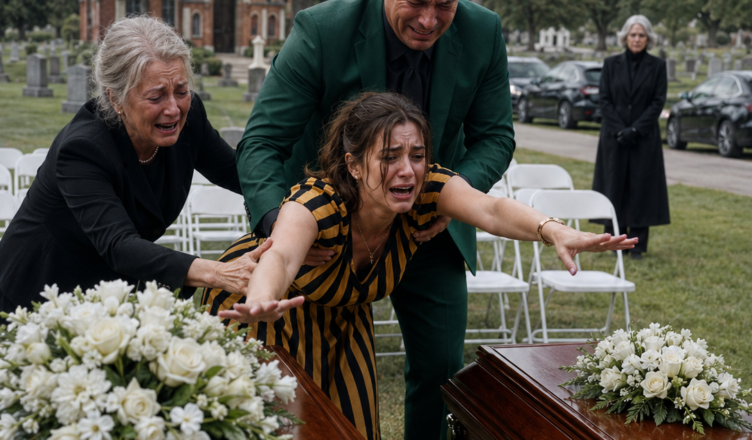
When I called my parents from the hospital chapel, my hands were still streaked with ash from the accident scene.
I could barely hold the phone.
My husband, Daniel, and our two children were gone.
The words still didn’t feel real. They were supposed to be sleeping at home that night. My husband had promised to bring the kids back from my sister’s birthday celebration before dark. But a drunk driver crossed the center line on the way home, and in a matter of seconds, my entire world disappeared.
I was the only one who survived.
At the hospital, doctors told me I had suffered several injuries, but somehow, I was alive.
I remember sitting alone in the chapel, staring at my hands.
They were covered in gray dust and ash.
I called my parents because I needed them.
I didn’t want money.
I didn’t want explanations.
I just wanted my mother to tell me that everything was going to be okay, even though we all knew it never would be again.
My mother answered.
“Where are you?” she asked.
“The hospital,” I whispered. “Mom… Daniel and the children are dead.”
There was a long silence.
Then I heard my father in the background.
My mother spoke quietly.
“Your sister’s birthday dinner is still going on.”
I couldn’t believe what I was hearing.
“Mom, I need you. Please. They’re gone.”
Another silence.
Then my father took the phone.
His voice was calm.
“Today is your sister’s birthday. We can’t leave.”
I thought I had misunderstood him.
“My husband and my children are dead.”
“I know,” he said.
“But their funeral is tomorrow.”
“We’ll call you later.”
And they hung up.
They didn’t come.
Not to the funeral.
Not to the cemetery.
Not even to the house afterward.
My sister, meanwhile, posted photographs from her birthday celebration that night. There were balloons, candles, champagne glasses, smiling faces and a giant cake.
I stared at those pictures from my empty living room while my children’s toys were still scattered across the floor.
Something inside me broke.
I stopped calling my parents.
I stopped asking why.
I stopped expecting them to care.
The months that followed were unbearable.
I had to learn how to wake up without hearing my son’s footsteps.
I had to walk past my daughter’s bedroom without opening the door.
I had to sleep on one side of a bed that was meant for two people.
Everyone told me grief would eventually become easier.
It didn’t.
But something else changed.
I became determined to survive.
I sold the house.
I moved to another state.
I started therapy.
And, almost by accident, I began writing about what had happened.
At first, nobody knew who I was.
I wrote anonymously about grief, family betrayal and rebuilding your life after losing everything.
One story became popular.
Then another.
Within months, thousands of people were reading my words.
I eventually revealed my identity.
And that’s when everything changed.
A journalist contacted me.
She wanted to interview me about my story.
I agreed.
The article was published on a Tuesday morning.
The headline read:
“Woman Who Lost Her Husband and Two Children Turns Personal Tragedy Into a Lifeline for Thousands.”
By noon, it had been shared hundreds of thousands of times.
By evening, my phone was flooded with messages.
And then my sister called.
I didn’t answer.
She called again.
Then my mother.
Then my father.
Over and over.
Finally, my father left a voicemail.
His voice didn’t sound calm anymore.
It sounded frightened.
“Please call us. We need to talk to you.”
I ignored it.
Then another message arrived.
This one was from my sister.
She wrote:
“You need to come home. There is something you don’t know.”
I stared at the screen.
For six months, none of them had come to me.
Now they were begging me to come to them.
I finally called my mother.
She started crying before she could even speak.
“Your father and I saw the article.”
“I know.”
“No,” she whispered. “You don’t understand.”
“Then explain it.”
She hesitated.
Then she said something that made my blood run cold.
“The accident wasn’t what we thought it was.”
I sat down.
“What do you mean?”
My mother began sobbing.
“Your father found something in your sister’s house the night after the funeral.”
“What did he find?”
She didn’t answer immediately.
Then she whispered:
“Daniel’s phone.”
My heart stopped.
“They told us the phone was destroyed in the accident,” I said.
“I know.”
“Then how did it end up at my sister’s house?”
My mother was silent.
And in that silence, I realized there was an entire part of the story that my family had been hiding from me.
A part that could explain why my parents had refused to come to my husband’s funeral.
And why, six months later, they were suddenly terrified of what I might discover.
I asked my mother one final question.
“Mom… what was on Daniel’s phone?”
She whispered:
“Messages.”
“From who?”
My mother’s voice broke.
“Your sister.”
I couldn’t breathe.
Then she said the words that changed everything:
“Your sister had been talking to Daniel for months before the accident.”
I looked at the framed photograph of my husband and children on the table.
And for the first time since the accident, I wondered whether the night I lost them had really been an accident at all.
