PART 1
—Maybe this will finally teach that spoiled little girl a lesson!
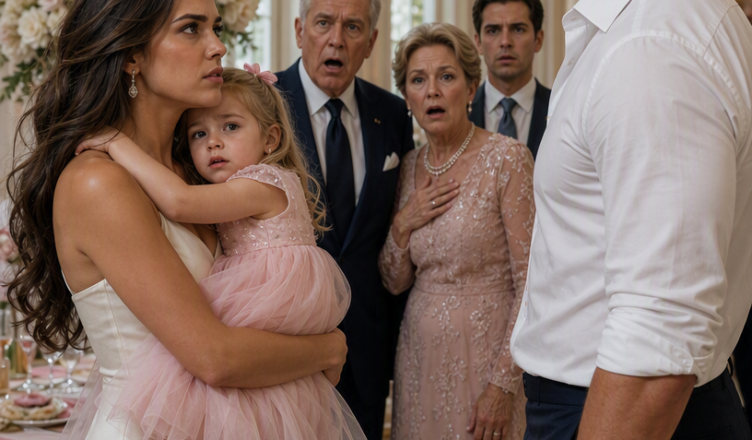
The sound of Sergio’s slap rose above the music and laughter at our family birthday celebration.
Lucía, my barely two-year-old daughter, froze for a moment. Then she burst into tears, frightened and confused.
I rushed over and pulled her into my arms.
—What did you do to my daughter?
Sergio calmly lowered his hand.
—What you clearly don’t know how to do: set boundaries.
Nearly twenty relatives were gathered in the backyard. They had all seen what happened.
—She’s two years old! I shouted.
—Exactly. That’s why she needs to learn now.
My mother, Elvira, stepped forward.
—Mariana, lower your voice. You’re ruining your father’s birthday.
I stared at her in disbelief.
—That’s what worries you more than what Sergio just did?
—Don’t exaggerate. It was just a slap.
—It was a slap across my daughter’s face.
My father defended Sergio too.
—You’re partly responsible. You let the girl do whatever she wants.
Sergio smiled.
—Someone had to teach her.
I looked at Lucía’s cheek. A red mark was beginning to appear beneath her eye.
But the slap wasn’t the only thing that hurt.
For years, I had heard the same excuses.
“Sergio is just like that.”
“He’s going through a difficult period.”
“Don’t provoke him.”
Everyone had learned to justify his shouting, threats, and outbursts.
I had stayed silent too.
Until that day.
I grabbed Lucía’s bag, her blanket, and the car keys.
—You’re leaving over something this ridiculous? my mother shouted.
I stopped at the door.
—No. I’m leaving because I finally understand whose side you’re on.
Nobody followed me.
In the car, my phone began filling with messages.
“Grow up.”
“You ruined the party.”
“Sergio was only trying to help you.”
“Apologize to him.”
I didn’t respond.
I created a folder on my phone called “Lucía — Evidence” and saved every message.
Then I took my daughter to a clinic.
The doctor examined her cheek, her eyes, and her reflexes.
—I’m going to document the injury, he told me. Can you explain exactly what happened?
For a moment, I felt the urge to minimize it.
But I looked at Lucía touching her face.
—My brother hit her because she took a decoration from the table.
The doctor stopped writing.
—If you wish, you can file a report. Because she is a minor, child protection authorities may also become involved.
That same night, I received a voice message from Sergio.
—You’d better leave this alone, Mariana. Don’t destroy the family over a spoiled little girl.
I saved the recording.
I also saved the photographs, the medical report, and every message.
Three days later, my mother called.
—We’re all getting together on Saturday. Your father wants peace.
I agreed.
They thought they were going to convince me to apologize to Sergio.
They didn’t know I had decided to stop protecting their secrets.
PART 2
On Saturday, the living room was packed.
My father sat in the main armchair, while my mother had arranged the chairs as if this were some kind of formal meeting.
Sergio arrived late.
—I hope today you’ll admit that you made a ridiculous scene, he said.
I didn’t answer.
My father cleared his throat.
—We’re here to heal as a family.
My mother added:
—Mariana needs to admit she overreacted. Sergio needs to control his temper. They hug, and we put this behind us.
Sergio laughed.
—I have nothing to apologize for. The girl was throwing a tantrum.
That was when I placed my phone on the table.
—I have only one question. If everything happened the way Sergio says it did, why does this recording tell a completely different story?
I pressed play.
First, there was the sound of music.
Then the slap.
Then Lucía’s crying.
And finally, Sergio’s voice:
—Maybe this will finally teach that spoiled little girl a lesson!
The recording continued with me asking why he had hit my daughter, followed by my parents minimizing what had happened.
When it ended, nobody spoke.
Then my cousin Alejandra looked up.
—Sergio pushed my son too, years ago.

Everyone turned toward her.
—Mateo was four. He spilled a drink on Sergio’s shirt, and Sergio threw him against a chair.
My mother tried to interrupt.
—That happened a long time ago.
—And you told me not to say anything because Sergio was going through a difficult time.
Another relative spoke.
Then another cousin.
And another.
Stories of pushing.
Shouting.
Threats.
Broken doors.
Children crying in hiding.
Women who had learned to stay silent.
Everyone had seen something.
Everyone had chosen to forget it.
Sergio jumped to his feet, furious.
—This is an ambush!
I looked at him.
—No. It’s memory.
He stormed out of the house, slamming the door behind him.
My mother looked at me with tears of anger in her eyes.
—Are you happy now? Did you humiliate your brother enough?
I put my phone away.
—The recording wasn’t the first thing I handed over.
My father went pale.
—Who did you give it to?
—The authorities. I already reported the assault against Lucía.
The atmosphere changed immediately.
They were no longer angry.
They were worried.
Over the following days, I handed over the medical report, photographs, messages, and recordings. Some relatives agreed to give statements.
Others chose to stay out of it.
Then Alejandra sent me something else.
—Your parents are calling everyone, she wrote.
—Why?
—They want us to remember things differently.
She sent me screenshots.
My mother was saying that “emotions can distort memories.”
My father warned that a statement could ruin Sergio’s life.
They had even tried to convince one relative to change her story by offering her financial help.
I handed those pieces of evidence over as well.
Soon afterward, I received an official notification regarding protective measures for Lucía.
But there was still one piece of evidence missing.
One that could prove this had not started with my daughter.
PART 3
The evidence appeared on a USB drive.
Alejandra came to my apartment one evening.
—I found this among some old videos, she told me. It’s from Mateo’s birthday party.
We connected the USB drive to the computer.
The video began with balloons, cake, and children playing.
Then Sergio appeared arguing with a boy who looked about six years old.
The little boy had taken the television remote.
Sergio grabbed him by the arm and shoved him against a chair.
The child fell and began crying.
Then my mother appeared.
But she didn’t approach him to help.
She walked toward the camera and covered it with her hand.
—Don’t record this. They’ll misunderstand it later.
My father picked up the child.
—Come on, don’t cry. It was an accident.
And Sergio muttered:
—These kids are unbearable.
Alejandra remained silent.
—I had forgotten that I kept recording, she said.
I shook my head.
—You didn’t forget. They taught you to doubt what you saw.
The next day, we handed over the video.
The investigator watched it carefully.
That changed everything.
It was no longer only about what had happened to Lucía.
There was a pattern.
For years, Sergio had hurt other children and adults while my parents protected his behavior and convinced everyone to remain silent.
More relatives began speaking.
One remembered that Sergio had locked children in a room during a family gathering.
Another person said he had smashed a teenager’s phone because she tried to record him while he was shouting.
Someone else showed photographs of bruises they had kept for years.
Every story had something in common.
Sergio lost control.
Someone got hurt.
And my parents demanded silence to “keep the family together.”
That was when I understood something painful.
For years, we had confused peace with silence.
I had said the same thing myself many times:
“That’s just Sergio.”
Now that sentence embarrassed me.
One afternoon, I saw Lucía coloring in the living room.
When she saw me, she ran over.
—Mommy.
I hugged her tightly.
I realized that my report wasn’t revenge.
It was a way to break the cycle before it reached my daughter again.
Eventually, protective measures were put in place.
Sergio was prohibited from approaching Lucía or contacting me.
Psychological evaluations and treatment were also ordered as part of the process.
My parents were furious.
My mother wrote me a six-page letter describing Sergio’s difficult childhood and how much he was suffering.
But nowhere did she ask how Lucía was doing.
Months later, during mediation, Sergio finally said:
—I made a mistake.
I looked at him.
—Do you regret hurting Lucía, or do you regret the consequences?
He didn’t answer.
—I lost control for one second. I’m not a monster.
—Nobody asked you to be perfect, I told him. We only asked you not to hit a little girl.
I never spoke to him again.
Over time, some relatives distanced themselves.
Others began acknowledging what they had allowed to happen for years.
Lucía needed time too.
For weeks, she became frightened whenever someone raised their voice.
One day, at a supermarket, a man argued with an employee and she immediately grabbed onto my legs.
—Does he hit? she whispered.
I crouched down and hugged her.
—No, sweetheart. And if anyone ever tries to hurt you, I will protect you.
Little by little, she became the happy little girl she had been before.
When she turned three, we held a small party.
There were balloons, games, and children running around the backyard.
At one point, Lucía tripped and spilled a drink.
She froze completely.
It looked as though she was waiting for someone to yell.
Mateo walked over.
—It’s okay.
Another little girl smiled.
—It was an accident.
I looked at Lucía.
—Go play, sweetheart.
She smiled and ran off again.
Months later, I ran into my parents at a shopping center.
My mother looked at Lucía.
—She’s grown so much.
—Yes.
—Will you ever forgive us?
I took my daughter’s hand.
—Forgiving someone doesn’t mean putting her in danger again.
My father lowered his eyes.
—We only wanted to keep the family together.
I looked at him one last time.
—No. You wanted everyone to tolerate the damage so Sergio would never have to change.
Then I took Lucía’s hand and walked away.
Maybe one day my parents would understand.
Maybe they never would.
But I no longer needed to convince them.
My responsibility was to teach my daughter that her body deserves respect, that her fear matters, and that no family gathering is more important than her safety.
I didn’t destroy my family.
I simply broke the silence that had allowed the abuse to continue for years.
