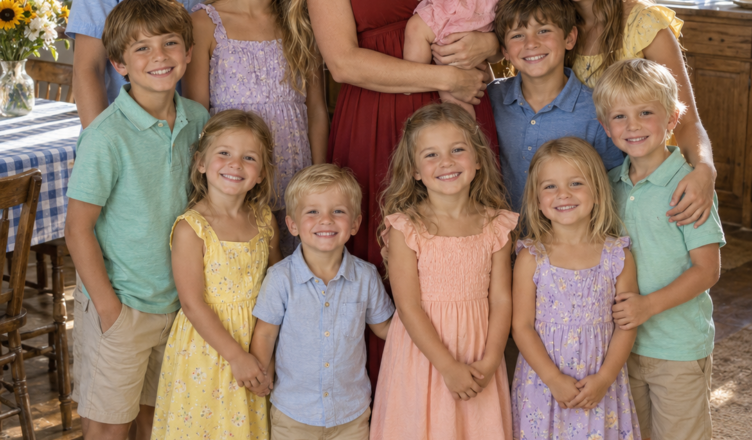
For thirty years, I believed Julian Vance had abandoned me.
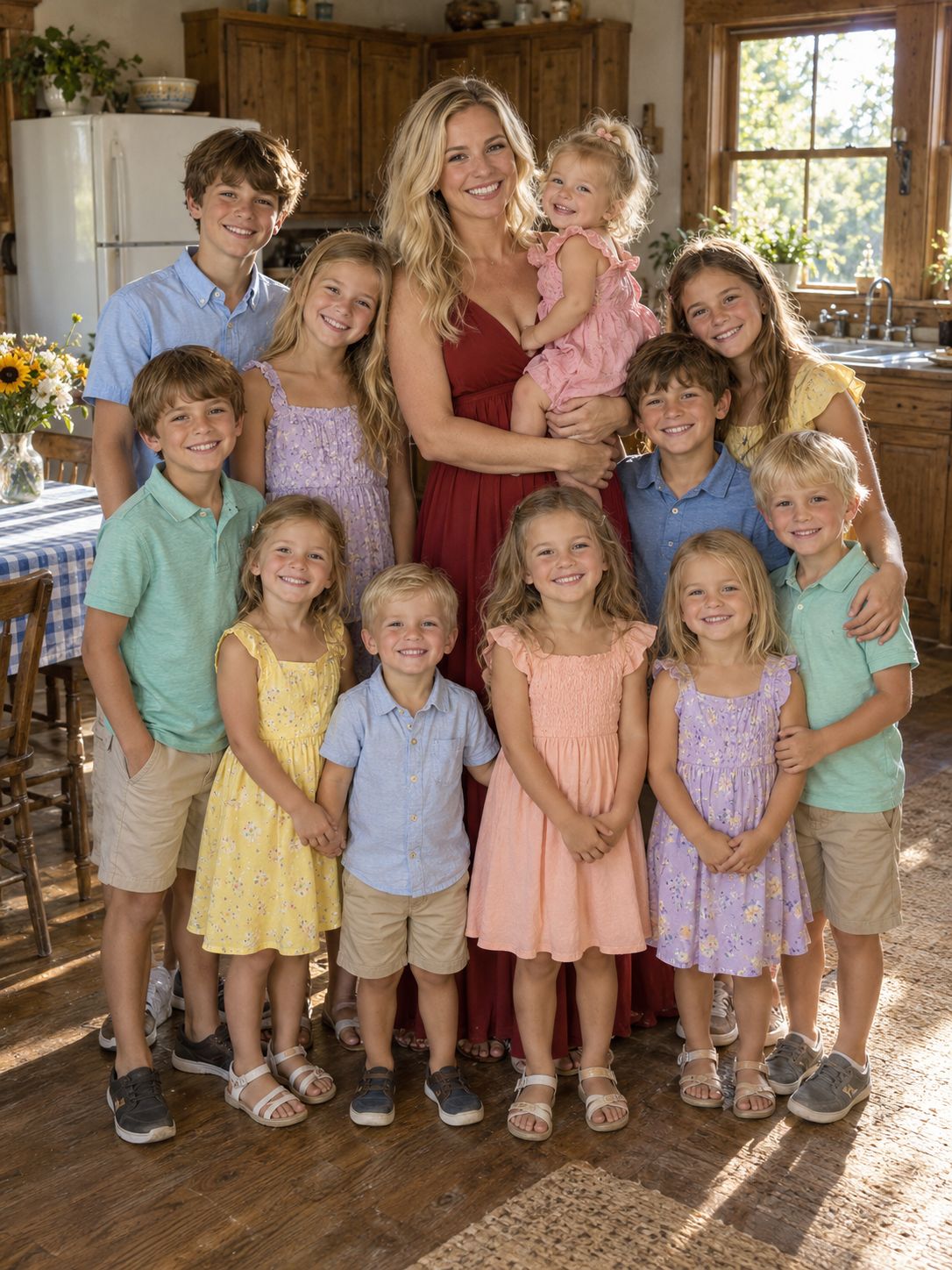
Not only me, but also the ten children we had raised together—and the entire future we had once imagined as a family.
Then one morning, everything I believed shattered.
We were gathered around the dining table when I opened a letter written in Julian’s familiar handwriting. My hands shook so badly that I could barely hold the page.
The first sentence took my breath away.
Julian said he had never left because he stopped loving us.
Before he disappeared, he had uncovered suspicious activity inside the family business, Vance Holdings. At first, he thought it was simply money being stolen. But the more he investigated, the more he realized that the truth involved deeper secrets and people he had trusted.
When he began looking for answers, the warnings started.
He became convinced that our family could be pulled into something dangerous.
So he made the worst decision of his life. He vanished.
For three decades, Julian lived under another identity, far from us, trying to erase every obvious connection to his former life. But he never stopped watching from a distance.
He knew about birthdays. He attended some graduations from the back rows. He learned about weddings, new careers, and the births of his grandchildren.
He knew almost every chapter of our lives.
He simply had never been part of them.
Beneath the letter was a recent photograph. Julian stood outside our old home. He was thinner now, with gray hair and a tired face—but it was unmistakably him.
Suddenly, I remembered an elderly man I had met a few months earlier. My grocery bag had torn, and oranges rolled across the sidewalk. He helped me pick them up.
Before leaving, he had said:
“You built something beautiful here.”
I had not recognized my own husband.
The letter also contained a small key and the name of Julian’s cousin, Arthur Vance.
The next morning, all of us went to see him. Arthur led us into a private room where eleven wooden boxes were lined against the wall. Ten had our children’s names on them.
The eleventh had mine.
ELEANOR.
I opened my box first.
Inside was the old wedding invitation Julian and I had planned so many years ago. Beneath it were legal documents explaining that he had created a financial structure to protect our family and preserve some of the assets he had left behind.
But I did not care about the money.
I had only one question.
“Why didn’t he ever come back?”
Arthur lowered his eyes.
“You need to hear that in his own voice.”
He placed an old recording on the table.
Julian’s voice filled the room. It was older, rougher, and tired—but still his.
He began by asking for forgiveness.
Then he explained that Conrad Mercer, one of his former associates, had been connected to the wrongdoing at Vance Holdings. Yet Conrad was not the only one responsible.
There had been family secrets, terrible choices, and people manipulating events from behind the scenes. Julian had collected documents that could expose the entire truth, and he believed that disappearing was the only way to protect us.
Months became years.
Fear became shame.
And shame became distance.
“At some point,” Julian said in the recording, “I simply didn’t know how to come back.”
We opened the other boxes.
Daniel found letters Julian had written for every birthday. Emily discovered photographs and keepsakes from the bakery she had opened. Michael found a photo taken the day he completed his firefighter training.
Sarah found pictures of her children. Jonathan found programs from the theater productions he had directed. Rebecca received newspaper clippings about her medical career.
Benjamin, the youngest, found an old recording of Julian singing him a song from childhood.
When he played it, we all felt as if time had turned backward for a few seconds.
Arthur also revealed that Julian had created a family fund. The amount was enough to change everyone’s lives.
But no amount of money could erase thirty years of absence.
Julian knew that.
“I tried to protect you in the wrong way,” he said in one message. “Then I became too ashamed to admit what I had done.”
But the truth was not over.
Arthur opened one final envelope. Inside was a warning: someone knew Julian had kept documents from the past. For years, Conrad Mercer had been trying to discover where they were hidden.
At first, we suspected Jonathan because a photograph showed him standing near Conrad. But Jonathan explained that Mercer had offered to support his theater financially.
Soon we learned he was not the only one.
Rebecca had met Conrad at a professional event. Anna had worked with a foundation connected to him. Thomas had done business with one of his companies. Lucy had attended an event funded by his organization.
Conrad had found seemingly ordinary ways to cross paths with almost every member of our family.
But Julian had left one final clue especially for me.
The note mentioned the place where “summer becomes winter.”
I understood immediately.
Thirty years earlier, during a summer picnic, Julian had given me a small snow globe. I had kept it in a forgotten box.
Inside was an instruction leading us to more documents hidden in a secure place.
And then we learned the whole truth.
Conrad had played a major role. He had threatened Julian and spent years trying to recover information that could destroy him.
But he had not acted alone.
Another member of the Vance family had been central to the fraud. The most important proof had been hidden inside something ordinary: an old recipe book from my family.
Arthur was devastated when he learned that the truth also involved his own father.
That night, we went to an old Vance Holdings building.
Conrad Mercer was waiting for us.
He was very old now. He did not look like the monster I had imagined all those years. He looked like a man who had spent his entire life running from the consequences of his choices.
He admitted that he had searched for information about our family and tried to find the documents.
“I told myself I was protecting people,” he said. “But I only made everything worse.”
I wanted to leave.
Then I heard footsteps behind us.
I turned around.
And there was Julian.
Alive.
After thirty years, he was finally standing in front of us.
He looked at me. Then he looked at our ten children.
No one ran toward him.
No one hugged him.
Michael spoke first.
“Don’t expect everything to become normal again.”
Julian nodded slowly.
“I don’t.”
Daniel asked why he had not returned once the danger was gone.
Julian looked down.
“At first, I was afraid. Then I was ashamed. And eventually, I didn’t know how to stand in front of you anymore.”
It was not an excuse.
And he did not try to make it one.
The documents were handed over to the proper authorities. But for our family, the hardest question was no longer what had happened inside the company.
It was what we would do with Julian.
He did not move back into the house immediately. For weeks, he stayed in a hotel.
One evening, he asked me:
“Can I come home?”
I looked at him for a long time.
“You don’t have a home here yet.”
Julian nodded.
“I understand.”
He never asked again.
Instead, he began doing something much harder.
He began showing up.
No grand speeches. No expensive gifts. No constant demands for forgiveness.
Daniel agreed to have coffee with him. Emily invited him to her bakery. Sarah allowed him to get to know his grandchildren. Jonathan showed him behind the scenes at his theater.
Michael ignored him for months.
Then, one winter morning, Michael’s truck broke down. When he walked outside, Julian was already there, ready to help.
“I can handle it myself,” Michael said.
“I know.”
“Then why are you here?”
Julian gave a small smile.
“Because I lost thirty years of chances to annoy you.”
Michael tried not to laugh.
He failed.
It was not forgiveness.
But it was a beginning.
With the money Julian had left, our children created good things. Daniel funded scholarships. Michael started a support program for firefighter families struggling through hard times. Rebecca contributed to pediatric research.
Anna opened an art space for the community. Lucy created opportunities for young dancers.
And Julian learned how to stay.
One Sunday, the whole family gathered for dinner. Ten grown children, grandchildren, plates everywhere, laughter, and voices overlapping.
Julian sat at the far end of the table.
Still a little like a guest.
But no longer like a stranger.
After dinner, he helped me wash the dishes. Thirty years earlier, we had stood at the same sink while planning the wedding that never happened.
Then he slipped a hand into his pocket.
“Don’t even think about it,” I said.
He laughed.
“It isn’t a ring.”
He took out our old wedding invitation.
“I’m not asking you to forget,” he said. “And I’m not asking you to erase thirty years of your life. I only want to know if you would like to finally have the day that was taken from us.”
I looked at him.
“A wedding?”
“A ceremony. However you want it. No secrets. No disappearing. No grand plan.”
I almost laughed.
Then I said:
“Yes.”
We held the ceremony the following spring. Our ten children walked with me. Julian was already crying before I reached him.
He said that for most of his life, he had believed love meant protecting people from every possible danger.
But now he understood that love also meant allowing the people you love to choose whether they wanted to face hardship beside you.
He had taken that choice away from us.
He could not give back the years we lost.
He could only do one thing.
Stay.
Months later, Emily gave birth to a baby girl. She named her Hope.
When Julian held the baby for the first time, he started to cry.
Emily smiled.
“She isn’t going anywhere.”
Julian looked at me, then at his children, and finally down at the baby.
“Neither am I.”
Years later, on a warm summer evening, our entire family gathered in the garden. The grandchildren ran across the grass, and Julian sat beside me.
He slowly held out his hand—but he did not take mine.
He waited for me to choose.
So I turned my palm over and laced my fingers through his.
“Are you happy?” he asked.
I looked at our family.
At the people who had chosen to stay.
“Yes,” I said.
A little girl called from across the garden:
“Grandpa!”
Julian’s face lit up. He stood and started walking toward her. Before he left, he looked back at me.
“Go,” I said.
This time, watching him walk away, I did not feel afraid.
I knew exactly where he was going.
And I knew he would come back.
Because after thirty years, we finally understood something:
A home is not a building, money, or secrets hidden for decades.
A home is the people who, despite everything, keep a light on for you.
