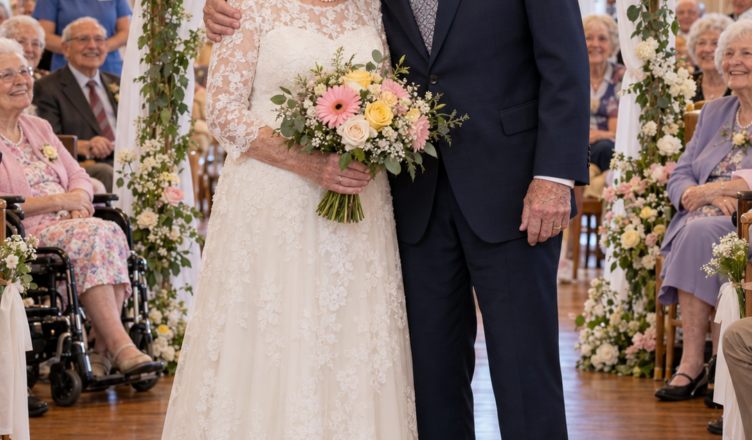
At seventy-eight, I thought life had finished surprising me. I had my routines, my small room in a senior living community, and few expectations for the years ahead.
Then I met Walter.
He lived in a private apartment on the top floor. He was over eighty, wealthy, and able to afford almost anything he wanted. But when he sat across from me at a chess table in the garden, he seemed to want something much simpler: company.
“I’ve been warned you’re hard to beat,” he said, studying the board.
“That depends on how good my opponent is.”
He laughed. Our first game lasted nearly an hour. Many more followed.
Before long, we were meeting beneath the same tree almost every afternoon. Sometimes we played chess. Sometimes we drank tea and listened to old jazz. We talked about books, places we had traveled, and choices we might have made differently.
I knew Walter had three grown children, though he rarely spoke about them. Their visits were brief and infrequent. One afternoon, after a close game, he stared at the pieces and said quietly, “Sometimes I think they care more about what I’ll leave behind than the time we still have together.”
I hoped he was wrong.
Over the following months, our friendship grew into love. It was gentler than the love I had imagined when I was young. We could sit together in silence without feeling lonely. Neither of us had to pretend to be anyone else.
Then Walter’s health began to decline, and his children started visiting more often. Conversations about his care and daily life became tense. Walter wanted a relationship with them, but he also wanted the personal and medical choices he had clearly made for himself to be respected.
One evening, he asked me to join him on his balcony. He looked unusually nervous.
“I want to ask you something,” he said. “You’ll probably think I’ve lost my mind.”
“At our age,” I told him, “we’ve earned the right to have a few unexpected ideas.”
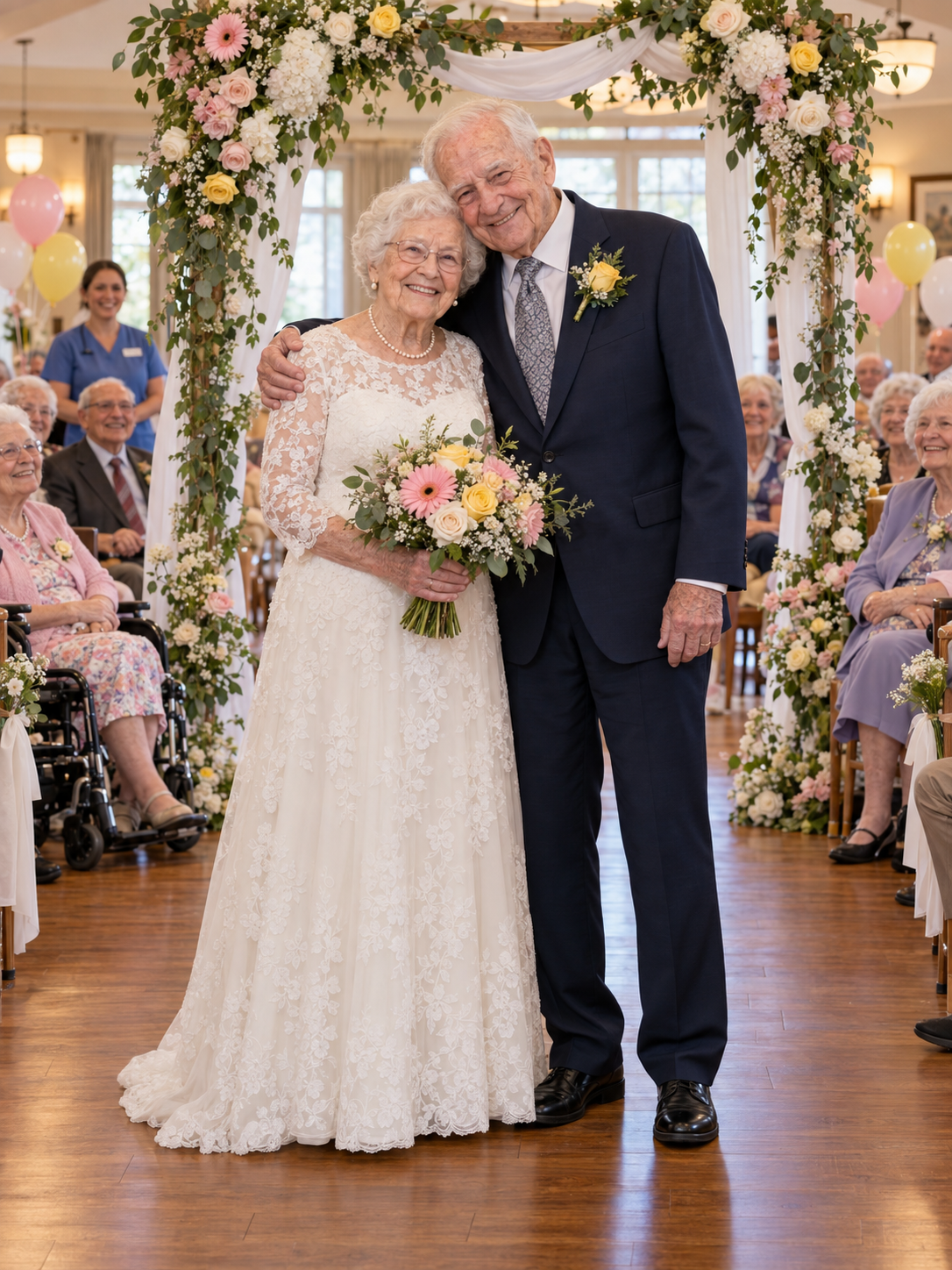
He smiled, took my hand, and asked me to marry him.
Walter said he trusted me and wanted us to spend whatever time remained together as husband and wife. He also hoped that having someone he trusted beside him would help ensure that his wishes were heard.
I asked him one question. “If you had no money, would you still ask me?”
“It would be even easier to ask,” he said.
I said yes.
Our wedding was small and private. I moved into his apartment, but our days kept their familiar rhythm. We played chess, read novels aloud, disagreed affectionately about music, and watched the sunset from the balcony. Those two years were among the most peaceful of my life.
In Walter’s final months, professionals helped care for him while I stayed close. One evening, he asked me to continue the novel we were reading. After a few pages, he closed his eyes. I sat beside him, holding his hand.
He died some time later.
At the funeral, his children spoke to me politely, though their words felt distant. I had no wish to argue with them. His money was the last thing on my mind. I would have given up anything valuable for one more ordinary evening with him on that balcony.
A week later, Walter’s longtime legal adviser came to see me. He carried a folder and a sealed cream-colored envelope. My name was written across it in Walter’s handwriting.
“Is this about the estate?” I asked.
He explained that Walter’s children had challenged aspects of our marriage and some decisions their father had made in his later years. They wanted the circumstances of those decisions examined.
“Walter knew what he wanted,” I said.
“There are professional records concerning his ability to make those decisions,” the adviser replied. “Those questions will be reviewed through the proper process.”
Then he touched the envelope. “But that isn’t the main reason I’m here. Walter asked me to give this to you personally after his death.”
I looked at my name. “What’s inside?”
“A letter. An old photograph. And something your husband said he had kept from you for a very long time.”
I thought I knew Walter so well. I knew how he liked his tea, which record he played when he felt melancholy, and the tiny change in his expression just before he won a chess game.
Yet as I held that envelope, I realized there was a part of his past I knew nothing about.
I opened it carefully. An old, slightly yellowed photograph slipped onto the table.
Walter was in it, much younger.
But Walter wasn’t the person who took my breath away.
It was the person standing beside him.
I knew that face. And from everything I had always believed about my own past, Walter should never have known that person.
The story ends here in the provided text.
