Saturday mornings are usually my favorite time of the week. After several busy days, I like making a cup of coffee, sitting on the porch, and enjoying the peaceful atmosphere of the neighborhood. I also take the time to admire the lawn I’ve carefully maintained for years. To some people, it’s just a patch of grass. To me, it’s the result of countless hours of work, patience, and care.
But that Saturday, everything changed within seconds.
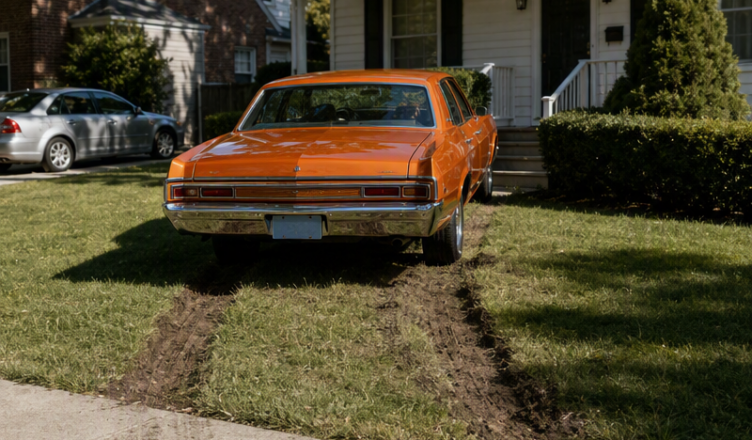
When I looked through the window, I saw my neighbor’s enormous SUV parked directly in the middle of my lawn. The tires had left deep tracks in the damp grass, and several areas had been completely flattened.
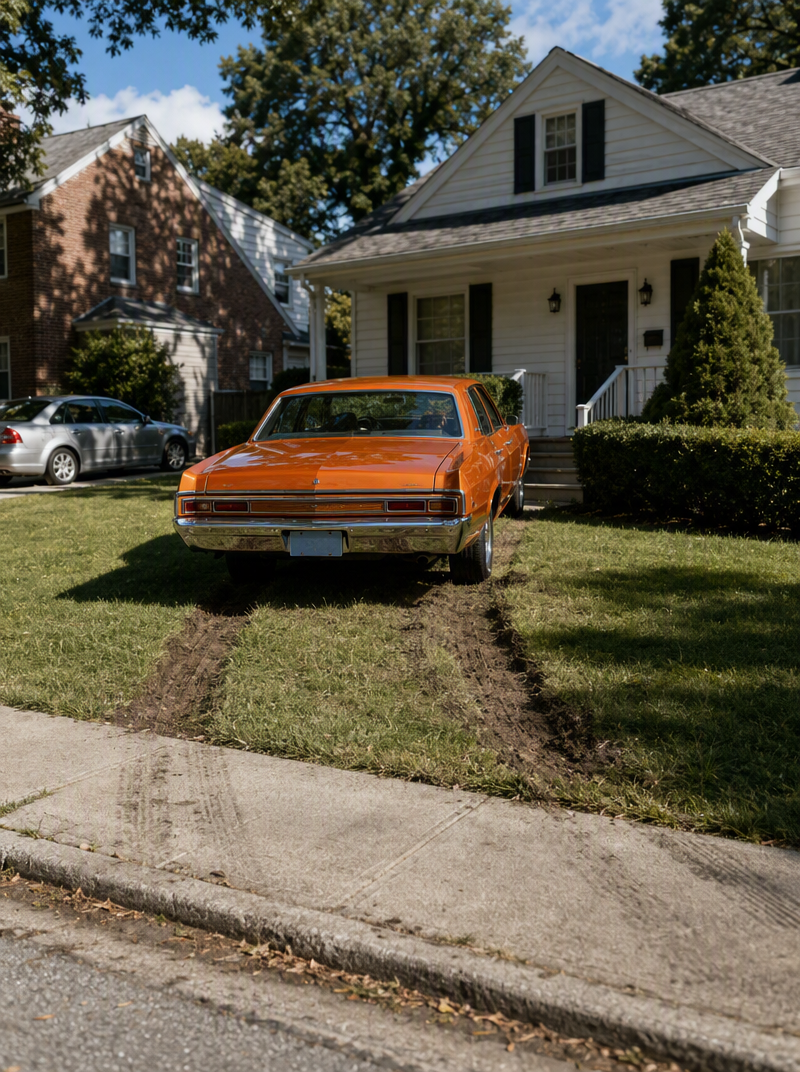
I stood there for a few seconds, unable to believe what I was seeing.
What made it even more frustrating was that several parking spaces were completely empty right in front of the houses. There was absolutely no reason for him to leave his vehicle on my property.
Unfortunately, this wasn’t the first time my neighbor had crossed a boundary. On previous occasions, he had left his trash bins beside my fence or walked across my garden as if it were simply a shortcut. Until then, I had always chosen to remain polite because I wanted to avoid unnecessary conflict and maintain a friendly relationship with the people living around me.
But this time was different.
I walked over to his house and knocked on the door.
He opened it almost immediately, wearing a smile that made me think he already knew exactly why I was there.
“Good morning. Could you move your vehicle? It’s parked on my lawn.”
He glanced behind me and shrugged.
“It’s just grass.”
I tried to explain that the issue wasn’t simply about the lawn. What mattered was respecting someone else’s property.
He answered casually:
“Don’t worry. It won’t happen again.”
Yet his tone made it clear that he wasn’t taking the situation particularly seriously.
For a moment, I considered continuing the conversation. I could have become angry, raised my voice, or turned the situation into an argument that the entire neighborhood would eventually hear about.
Instead, I decided to stay calm.
I simply wished him a good day and went back home.
For the rest of the day, I thought about a practical way to prevent something similar from happening again. A few neighbors told me they had experienced comparable situations. Everyone agreed on one thing: clear communication and clearly established boundaries can prevent a lot of unnecessary misunderstandings.
So I decided to handle the matter in a simple and constructive way.
Later that afternoon, I placed a small sign at the entrance to my property:
“Private Property — Please Do Not Park on the Lawn.”
I also adjusted my security camera so that it had a better view of the garden and could record anything that happened there in case another incident occurred.
The next morning, I woke up curious.
The SUV was gone.
A few minutes later, I saw my neighbor walk out of his house. He stopped in front of the sign and then carefully examined the tire marks left across the grass.
For the first time, he seemed to understand the consequences of what he had done.
A little while later, he came to my door.
When I opened it, his attitude was completely different from the day before.
“I have to admit, I didn’t really think about what this meant to you. Seeing the damage this morning made me realize that I was wrong. I’m sorry.”
I honestly hadn’t expected to hear those words.
This time, he didn’t try to make excuses.
He didn’t minimize what had happened either.
Instead, he offered to help repair the damaged lawn and even offered to contribute to the cost if necessary.
I accepted his apology.
We spent part of the morning repairing the damaged areas, adding fresh soil, and reseeding the grass. As we worked, we started talking and realized that several of the small disagreements we’d had over the previous months were simply the result of poor communication.
From that day forward, our relationship improved considerably.
He never parked on my property again. In fact, he eventually started reminding his own visitors to respect private spaces whenever they were looking for somewhere to park.
That experience taught me something important: responding calmly and establishing clear boundaries can often be far more effective than reacting with anger.
Sometimes, an honest conversation can turn a disagreement into an opportunity to understand each other better.
Ever since then, whenever I sit on the porch with my morning coffee, I look at my lawn and smile.
It didn’t just recover its original appearance.
It also became a reminder of a simple lesson:
Respect between neighbors often begins with something as simple as recognizing and honoring each other’s boundaries.
