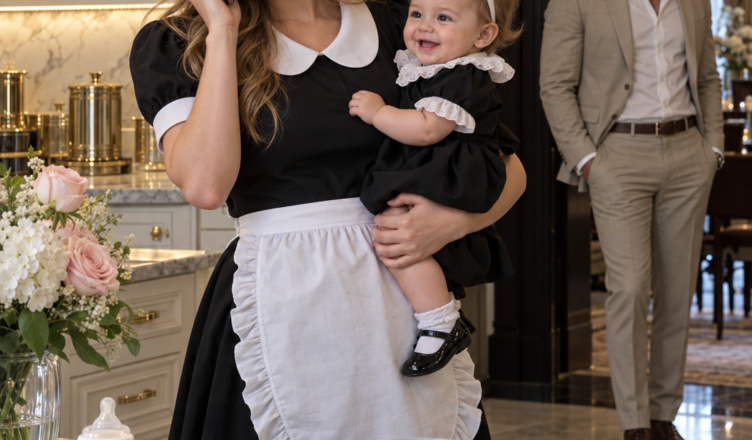
My name is Adrian Whitmore.
At thirty-eight, I ran a large construction company just outside Boston. My days revolved around meetings, contracts, and budgets with so many zeros that I had stopped noticing what a small amount of money could mean in someone else’s life.
Twenty-eight dollars reminded me.
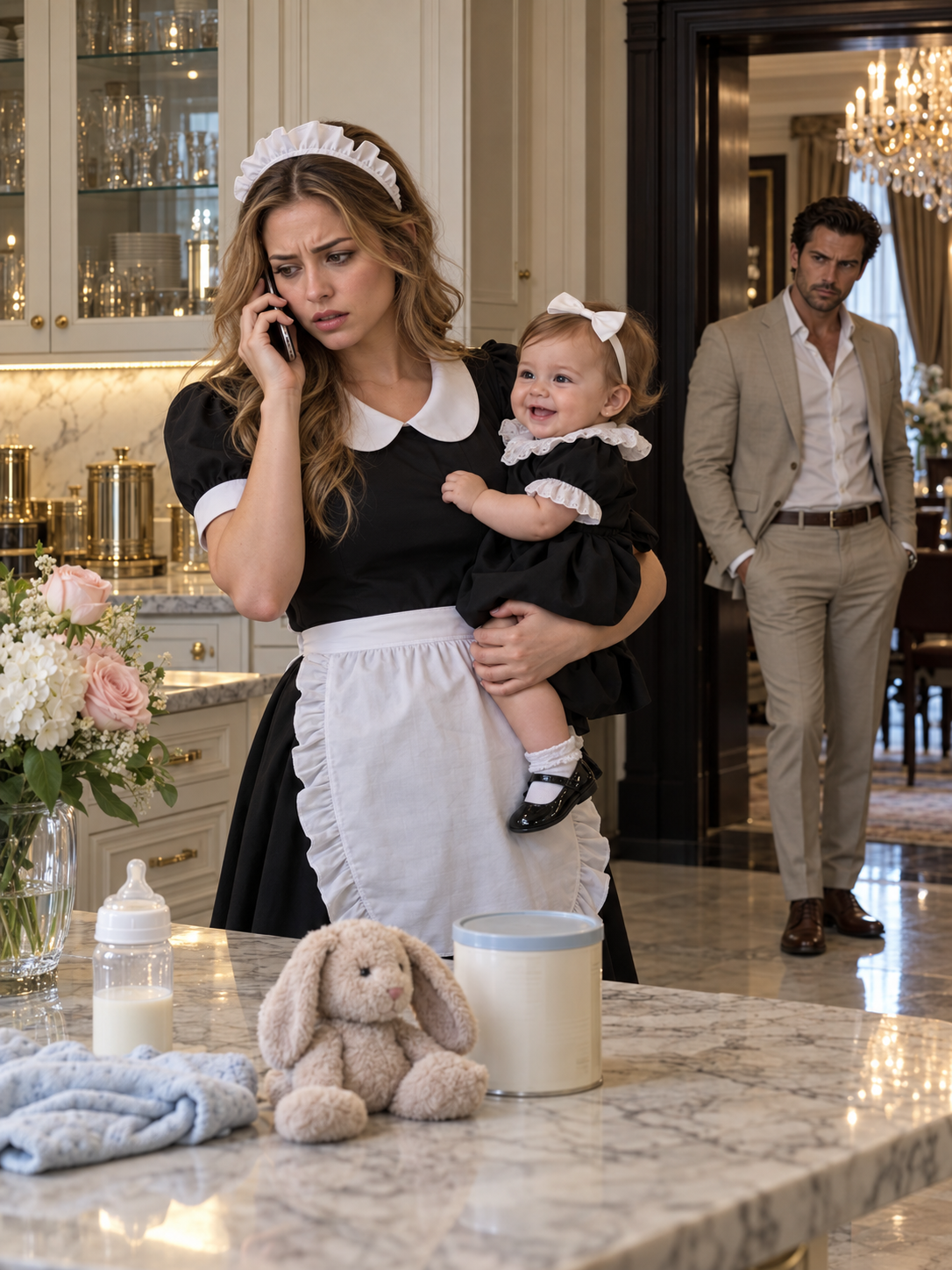
It was a rainy Tuesday morning. I was walking down the hallway when I heard Marissa Keane speaking on the phone in the kitchen.
She had worked for me for about seven months.
She was quiet, punctual, and dependable. I knew she was a widow raising a little boy named Owen, but I had never asked much about her circumstances. I thought giving her privacy meant keeping my distance.
I was about to walk away when I heard her say:
“Mom, could you lend me twenty-eight dollars?”
I stopped.
After a brief silence, she lowered her voice.
“It’s for Owen’s milk. We’re almost out, and I thought I could make it until payday.”
She listened for a moment, then quickly added:
“No, don’t use your grocery money. I’ll figure something out.”
I moved on before she noticed me.
But once I reached my office, I couldn’t focus.
Twenty-eight dollars.
I could spend that much without glancing at a receipt. For Marissa, it meant getting something her child needed.
Details I had barely noticed began coming back to me.
Her aging car.
The lunches she always brought from home.
How rarely she agreed to stay late, probably because she had to pick up Owen.
I had appreciated her punctuality without ever considering what it took for her to arrive on time.
I reviewed the employment records relevant to her position and pay. Her wages arrived regularly, but rent, transportation, childcare, and everyday expenses could leave little room for an unexpected bill.
I wanted to help without making her feel exposed.
I considered adjusting her pay and introducing broader support for employees facing financial difficulties. A lasting solution seemed better than making her explain her hardship to receive a favor.
Then a name in her records caught my attention.
Nathan Keane.
Her late husband.
I stared at it.
I had heard that name before.
Four years earlier, I had entered my grandfather’s study while my father was speaking with Raymond Pierce, the legal adviser who had worked with our family for decades.
Most of their conversation had faded from my memory.
One exchange had not.
“A specific decision was made concerning Nathan,” Raymond had said.
My father had immediately interrupted him.
“That matter is closed.”
The moment they noticed me, both men fell silent.
Later, I asked my father what they had been discussing.
“It doesn’t concern you,” he replied.
I let it go.
But afterward, I began noticing something peculiar. Whenever Nathan Keane’s name came up, even casually, someone steered the conversation elsewhere.
Nobody explained who he was.
Nobody explained why mentioning him made them uncomfortable.
Now I had learned that his widow had been working in my home for seven months.
That evening, I bought groceries and a few things for Owen. I planned to bring them to Marissa and explain that it was temporary help while I reviewed her employment arrangements.
As I reached her building, a sedan pulled up nearby.
A man stepped out.
Raymond Pierce.
I stayed beside my car, holding the shopping bags.
What was my family’s lawyer doing there?
Raymond approached the entrance. Marissa opened the door, and even from a distance, I saw her expression tighten when she recognized him.
A few minutes later, he briefly stepped outside again.
That was when he saw me.
He stopped.
“Adrian?”
Marissa appeared behind him.
“Mr. Whitmore?”
I lifted the bags slightly.
“I came to drop off a few things. It looks like I’ve arrived at a difficult moment.”
Marissa looked at Raymond.
He hesitated before answering.
“Perhaps you’ve arrived when you needed to.”
I waited until Marissa invited me inside.
Her apartment was small and carefully kept. A baby blanket and several of Owen’s things lay near the couch.
On the table sat an old blue envelope.
A symbol was printed in one corner.
I recognized it immediately.
It was an emblem my family had used years ago.
I turned to Marissa.
“Where did that envelope come from?”
She lowered her eyes.
“It belonged to Nathan.”
Raymond opened it carefully.
“Her husband entrusted me with several documents. He asked me to keep them while certain family matters were being resolved.”
“What family matters?”
Marissa clasped her hands in her lap. Her eyes grew wet.
“Nathan didn’t want a fight.”
Raymond nodded.
“He wasn’t asking for special treatment. He wanted certain facts acknowledged after they had been left unresolved for far too long.”
I looked between them.
“What facts?”
Raymond removed a sheet of paper and handed it to me.
It was several years old.
At the bottom, I recognized my grandfather’s signature.
Farther up the page was Nathan Keane’s full name.
I began reading.
Then I stopped at one paragraph.
I went back and read it again, more slowly.
“Is this document genuine?”
Raymond answered cautiously.
“The available records connect it to your family’s files. But every detail needs to be formally verified before we treat anything as established.”
I continued reading.
The document referred to a connection between Nathan and a branch of the Whitmore family I had never heard about.
It did not explain everything.
There were gaps, unanswered questions, and references I didn’t understand.
Yet it challenged something I had always assumed.
Nathan apparently hadn’t been merely someone who worked for my family.
His connection to us seemed far more personal.
I looked at Marissa.
Only hours earlier, I had been worried about whether she could buy milk for Owen. Now I was sitting in her apartment, holding a document bearing my grandfather’s signature and wondering how much the people closest to me had concealed.
The silence surrounding Nathan’s name suddenly felt deliberate.
If he belonged to our family’s history, why had no one acknowledged him?
Why had my father ended that conversation so abruptly?
And where did Marissa and Owen fit into all of this?
Raymond gathered the papers and placed them beside the envelope.
“Adrian, there’s more you need to hear before you draw any conclusions.”
I looked once more at my grandfather’s signature.
Everything had started with a phone call I happened to overhear and a request for twenty-eight dollars.
Now that small amount had brought me to a story my family had kept hidden for years.
Raymond took a breath.
I waited, knowing that what he said next might change how I saw the Whitmores forever.
Write “YES” in the comments if you want to read the full story.
